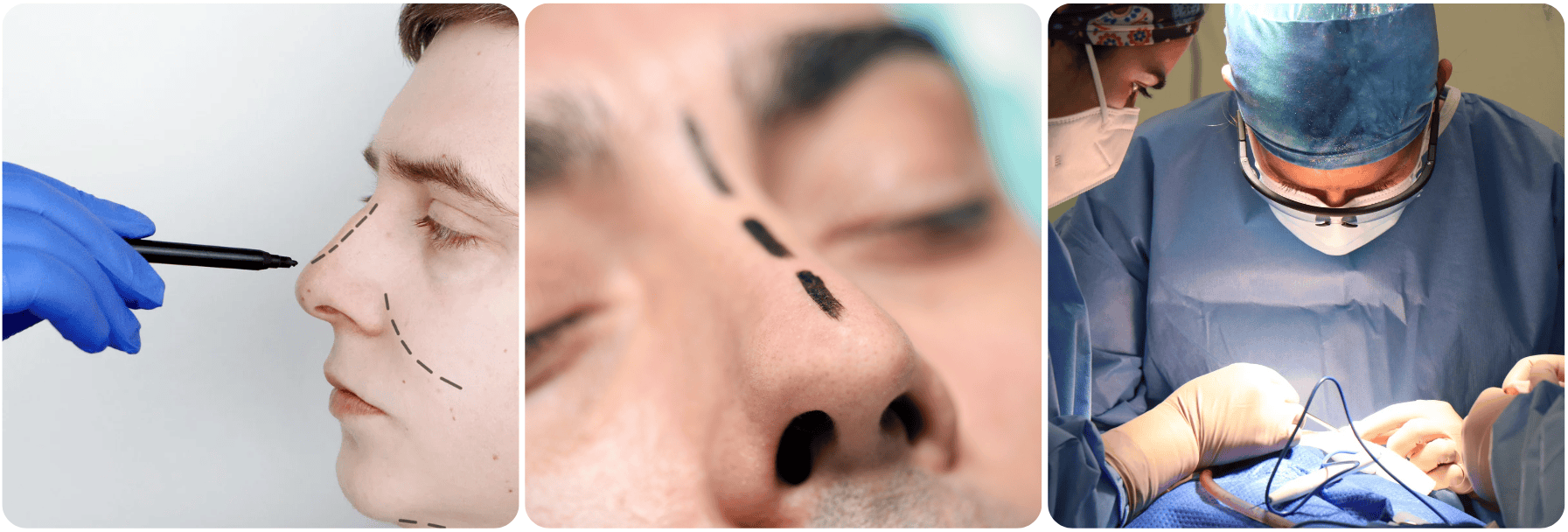
A tip rhinoplasty, also known as nasal tip surgery, is a cosmetic procedure focused on reshaping, resizing, or repositioning the nasal tip. Unlike a full rhinoplasty, which involves altering the entire nose, a tip rhinoplasty specifically targets only the tip of the nose. This procedure is often chosen by individuals who are dissatisfied with the appearance of their nasal tip, such as if it is too wide, round, or asymmetrical. It can also address issues such as the angle between the nasal tip and the upper lip or correct a drooping nasal tip.
A tip rhinoplasty, also known as nasal tip surgery, is a cosmetic procedure focused on reshaping, resizing, or repositioning the nasal tip.
The procedure can be performed surgically or non-surgically. In surgical tip rhinoplasty, a plastic surgeon typically makes a small incision to access the underlying structures of the nasal tip. Cartilage is then reshaped, removed, or added to create the desired appearance. This surgery can be performed under local or general anesthesia, depending on the complexity of the correction and the patient’s preference. Non-surgical tip rhinoplasty uses dermal fillers to sculpt the nasal tip, although this is a temporary solution compared to the permanent results achieved through surgery.
Tip rhinoplasty is generally less invasive than a full rhinoplasty, with a shorter recovery time and fewer risks. Recovery time varies, but most patients can return to their daily activities within a few weeks. Swelling and bruising are usually limited to the tip area and gradually subside in the weeks following the procedure.
This surgery is particularly suitable for individuals who want to address specific aesthetic concerns with their nasal tip without making significant changes to the rest of their nose. The outcome can be a subtle yet effective enhancement of facial appearance, providing a more balanced and natural-looking nose that harmonizes with other facial features. As with any cosmetic procedure, it is crucial to choose an experienced and qualified surgeon to ensure that the results meet the patient’s expectations.
Tip rhinoplasty, or nasal tip surgery, is a specialized cosmetic procedure focused on reshaping or refining the nasal tip to enhance the appearance of the nose. People often choose this procedure when they are dissatisfied with the shape, size, or symmetry of the tip of their nose, but do not need full rhinoplasty. Common reasons for undergoing tip rhinoplasty include having a nasal tip that is bulbous, droopy, wide, or boxy.
Others may feel their tip is too upturned or downturned, causing an imbalance with the rest of their facial features. The procedure is ideal for those who are generally happy with the overall shape of their nose but want to improve specific aesthetic concerns related to the tip. In some cases, individuals may choose tip rhinoplasty after a previous rhinoplasty to make minor adjustments to the nasal tip. This surgery is appealing because it allows for noticeable enhancements to the nose’s appearance while involving a less invasive and more targeted approach compared to full rhinoplasty. Patients often seek tip rhinoplasty to improve the overall balance and harmony of their face, creating a more refined, proportionate look without significant changes to the rest of the nose.
Tip rhinoplasty is a precise and delicate procedure that involves reshaping the cartilage and soft tissues at the tip of the nose to achieve the desired aesthetic results. Depending on the patient's needs and the specific concerns with the nasal tip, the surgeon may use either an open or closed approach.
In an open tip rhinoplasty, a small incision is made across the columella (the tissue between the nostrils) to lift the skin and provide better access to the underlying cartilage. This method is often chosen when more extensive reshaping of the nasal tip is required, as it allows the surgeon greater visibility and control. In a closed tip rhinoplasty, the incisions are made inside the nostrils, leaving no visible scarring on the outside of the nose. This technique is typically used for minor adjustments and is less invasive, with a faster recovery time.
Tip rhinoplasty is a precise and delicate procedure that involves reshaping the cartilage and soft tissues at the tip of the nose to achieve the desired aesthetic results.
Once the incisions are made, the surgeon reshapes the cartilage of the nasal tip, either by trimming or repositioning it to achieve a more refined appearance. If necessary, cartilage grafts from another part of the body, such as the ear or septum, can be used to provide additional support or definition to the tip. The goal is to create a balanced and natural-looking nasal tip that complements the rest of the nose and the overall facial structure. The entire procedure usually takes one to two hours, depending on the complexity of the case, and it can be performed under local or general anesthesia. Recovery from tip rhinoplasty is typically quicker and less uncomfortable than traditional rhinoplasty, with most swelling and bruising subsiding within a few weeks.
Understanding the recovery timeline is important for anyone considering tip rhinoplasty. Initial swelling and bruising are most noticeable during the first week but typically subside by week two. By week three to four, most patients feel comfortable resuming normal social and professional activities. Light exercise can usually be restarted after four weeks, with more strenuous workouts delayed until around six to eight weeks. Final results often appear after several months, as residual swelling gradually resolves and cartilage settles into its new position.
In some tip rhinoplasty cases, cartilage grafts are necessary to provide support or enhance definition. Surgeons may use cartilage from the septum, ear, or rib depending on availability and the desired outcome. Grafts can help lift a drooping tip, add projection, or refine the tip’s shape. They are carefully shaped and secured to ensure long-term stability. The use of cartilage grafts allows surgeons to achieve precise, durable results, especially in revision cases or when the natural cartilage is insufficient.
While tip rhinoplasty is generally safe, patients should be aware of potential risks. These include minor asymmetry, temporary swelling, and changes in sensation around the tip. Infection, bleeding, or poor healing are rare but possible. Patients with a history of nasal trauma or previous surgeries may require more complex planning. It is essential to follow all pre- and post-operative instructions to reduce complications. Consulting a qualified surgeon and discussing all concerns beforehand ensures informed decision-making.
Tip rhinoplasty offers several benefits, especially for individuals who are primarily concerned with the appearance of their nasal tip and do not require major changes to the entire structure of the nose. One of the main advantages is that it allows for targeted enhancements, meaning patients can achieve a more refined and balanced nasal tip without undergoing a full rhinoplasty.
This makes the procedure less invasive and more focused, with a shorter recovery period compared to more extensive nasal surgeries. Tip rhinoplasty is highly customizable, allowing the surgeon to make precise changes to address specific concerns such as reducing the size of a bulbous tip, correcting asymmetry, or adjusting the angle of a drooping or upturned tip. This tailored approach helps create a natural, harmonious result that blends seamlessly with the rest of the nose and the patient’s facial features.
Tip rhinoplasty offers several benefits, especially for individuals who are primarily concerned with the appearance of their nasal tip and do not require major changes to the entire structure of the nose.
Another significant benefit of tip rhinoplasty is that it provides noticeable improvements in the appearance of the nose while minimizing the risks and recovery time associated with more comprehensive procedures. Because the surgery focuses on a smaller area of the nose, the healing process is typically quicker, with less swelling and bruising. Patients can expect to return to their normal activities sooner, with most of the visible signs of surgery fading within a few weeks. In addition to the aesthetic benefits, tip rhinoplasty can also enhance self-confidence and improve the overall balance of the face.
Many individuals find that even minor adjustments to the nasal tip can dramatically improve their facial proportions, making them feel more satisfied with their appearance. Overall, tip rhinoplasty is an effective option for those looking to refine their nasal tip while maintaining the natural character and balance of their face.
Targeted enhancement of the nasal tip without needing full rhinoplasty.
Less invasive procedure with a shorter recovery period compared to full nasal surgery.
Highly customizable to address specific concerns such as bulbous tips, asymmetry, or drooping/upturned tips.
Creates a natural, harmonious result that blends with the rest of the nose and facial features.
Noticeable aesthetic improvements while minimizing risks associated with more extensive procedures.
Faster healing with less swelling and bruising.
Quicker return to normal activities, with visible signs of surgery fading within weeks.
Enhances self-confidence and overall facial balance.
Effective for refining the nasal tip while maintaining the nose’s natural character.
Swelling after tip rhinoplasty is normal but can be managed with a few strategies. Keeping the head elevated while sleeping, applying gentle cold compresses, and avoiding salty foods can reduce fluid retention. Limiting physical activity during the early recovery phase also helps. Patients are encouraged to follow their surgeon’s instructions regarding medications and wound care. Gradual reduction of swelling contributes to the final, refined appearance of the nasal tip.
There are several different techniques used in tip rhinoplasty, and the choice depends on the patient’s unique nasal anatomy and cosmetic goals. The two primary surgical approaches are open tip rhinoplasty and closed tip rhinoplasty.
Open tip rhinoplasty involves a small incision on the columella (the tissue between the nostrils), allowing the surgeon full visibility and access to the nasal tip cartilage. This technique is commonly used when more complex or detailed reshaping is needed, such as in cases of significant asymmetry, bulbosity, or previous surgeries.
Closed tip rhinoplasty involves incisions made only inside the nostrils. This method is less invasive, leaves no external scars, and is suitable for patients needing subtle refinements to the nasal tip.
In addition to these surgical options, there is also non-surgical tip rhinoplasty, which involves the use of dermal fillers to contour or lift the nasal tip. This technique is non-invasive and ideal for those looking for temporary improvements without surgery. However, because the results are not permanent and the procedure does not involve structural changes, it is best suited for mild cases or patients wanting to “preview” a change.
Some patients may also benefit from cartilage grafting, especially if additional structure or definition is needed in the tip. These grafts are usually harvested from the septum, ear, or rib and are carefully shaped and placed to support the desired nasal contour.
Each type of tip rhinoplasty has its advantages, and the best choice will depend on the individual’s anatomy, expectations, and whether this is a first-time or revision surgery. A qualified plastic surgeon or facial plastic specialist will recommend the most appropriate technique during a consultation.
Tip rhinoplasty is best suited for individuals who are unhappy with the shape, size, or position of their nasal tip but are otherwise satisfied with the overall structure of their nose. Ideal candidates include those who have:
A bulbous or rounded nasal tip
A drooping or downturned tip
A tip that is too wide, upturned, or asymmetrical
Minor tip irregularities following a previous rhinoplasty
A desire for subtle nasal refinement without major structural changes
Candidates should be in good overall health and have realistic expectations about what the procedure can achieve. It is also important for the nasal structure to be fully developed, which typically occurs by the mid to late teens. Both surgical and non-surgical options are available depending on the patient’s anatomy and goals, but a thorough consultation is essential to determine suitability.
Tip rhinoplasty is particularly attractive to those seeking natural-looking results that enhance facial harmony without dramatically altering their appearance. Patients looking for a quicker recovery and a more conservative approach to nasal surgery also tend to be excellent candidates.
The results of surgical tip rhinoplasty are typically long-lasting and often permanent, especially when performed by a skilled and experienced surgeon. Once the nasal tip has healed and the cartilage has settled into its new shape, the outcome is generally stable for many years. Most patients begin to see the final contour of their nasal tip after swelling subsides—usually within a few months, although subtle changes may continue to evolve over the first year.
Non-surgical tip rhinoplasty results, by contrast, are temporary, as dermal fillers gradually dissolve over time. Depending on the type of filler used and individual metabolism, results can last anywhere from 6 to 18 months. Repeat treatments are necessary to maintain the effect.
To ensure lasting surgical results, patients should follow all post-operative care instructions, avoid trauma to the nose during the healing phase, and attend all follow-up appointments. While rare, minor revisions can be performed if needed after healing is complete.
In conclusion, tip rhinoplasty offers patients a highly effective solution for refining and enhancing the nasal tip. Whether surgical or non-surgical, the improvements can significantly elevate facial balance and self-confidence.
Recovery after tip rhinoplasty is usually quicker than full rhinoplasty, but following proper care is essential for optimal results. Patients should avoid strenuous exercise and activities that could risk injury to the nose for at least two weeks. Keeping the head elevated while sleeping helps reduce swelling and bruising. Cold compresses applied gently can alleviate discomfort, while avoiding pressure on the nasal tip. Patients should also refrain from wearing glasses that rest on the nose until fully healed. Regular follow-up visits allow the surgeon to monitor healing and ensure that the tip maintains its intended shape.
Non-surgical tip rhinoplasty has gained popularity for patients seeking temporary or minor corrections. This procedure involves the use of dermal fillers, such as hyaluronic acid, to lift, reshape, or smooth the nasal tip. Benefits include minimal downtime, immediate results, and the ability to preview changes before committing to surgery. Fillers can correct minor asymmetries, enhance tip projection, or improve the tip-to-lip angle. While temporary, this option is ideal for patients who want subtle adjustments without undergoing invasive surgery.
Once recovery from tip rhinoplasty is complete, patients can enjoy long-lasting results. Maintaining a healthy lifestyle and avoiding trauma to the nose is recommended. Minor touch-ups are rarely needed, but follow-up visits can help monitor the nasal tip’s stability. Protective measures during sports or high-impact activities ensure the tip remains intact. Regular check-ups also allow surgeons to identify any subtle changes early and provide guidance if minor adjustments are necessary.
Tip rhinoplasty is not limited to a single nasal type. Surgeons skilled in ethnic rhinoplasty understand the unique characteristics of different noses. Adjustments may include refining a rounded tip, narrowing a broad tip, or enhancing tip projection without compromising ethnic identity. Customizing the procedure for each patient ensures natural-looking results that respect facial heritage. This approach allows for culturally sensitive outcomes while achieving aesthetic refinement.
Age can influence the approach to tip rhinoplasty. Younger patients may have more elastic skin and less cartilage, which requires careful reshaping. Older patients may benefit from additional support techniques to maintain tip projection over time. Surgeons consider age-related changes to ensure results are harmonious with the rest of the face. This individualized approach ensures long-term satisfaction and a natural appearance.
For patients seeking minor enhancement, non-surgical tip rhinoplasty offers temporary solutions. Dermal fillers can raise a slightly drooping tip, correct minor asymmetry, or improve tip-to-lip angles. The procedure is fast, often completed in under 30 minutes, and requires no downtime. Results last from 6 to 18 months, depending on the filler used. This option is ideal for patients exploring the appearance of a tip change before committing to surgery.
Revision tip rhinoplasty can be more complex than a first-time procedure. Scar tissue from previous surgeries may limit cartilage manipulation. Surgeons may need to use grafts or advanced techniques to achieve symmetry and projection. Careful planning and realistic expectations are crucial. Skilled surgeons evaluate the underlying structure thoroughly and develop a tailored approach to refine the tip safely. Successful revisions restore balance and improve the aesthetic outcome.
During your consultation, you will discuss your wishes, medical history, and expectations with the doctor. The doctor will examine you, take measurements if necessary, and explain which treatment suits you best, including risks and recovery. You will have the opportunity to ask questions and then receive a clear treatment proposal.
Make sure you have all relevant medical information ready, such as previous treatments, allergies, or medical conditions. This allows the doctor to give you better advice.
Payment is made securely via SurgeryBooking. You pay the amount in advance to SurgeryBooking. We hold the funds and transfer them to the clinic after your treatment. Cancellation or change conditions vary per clinic and are clearly communicated in advance.
During the consultation (online or at the clinic), the doctor will assess this based on your health, expectations, and physical characteristics. You will discuss what you want, what is possible, and what the limitations are. Sometimes there are alternatives if the chosen treatment is not ideal.
Through SurgeryBooking.com, you can quickly and easily book a consultation or procedure with doctors and clinics worldwide. SurgeryBooking.com provides an overview of doctors and clinics, allowing you to make an informed and transparent choice when booking a consultation or procedure.
You can easily book through the profile of the desired clinic or doctor. Select the desired treatment, enter your details, and choose an available date and time. If there are any costs involved, you will complete the payment first. Afterwards, you will receive a confirmation email with all the details.
Yes, during the booking process, you can indicate whether you prefer an online consultation or an in-person consultation at the clinic.
With SurgeryBooking.com, you gain access to a global network of doctors and clinics. Through SurgeryBooking.com, you can easily book a consultation or a cosmetic procedure directly. Clinic profiles provide information about available cosmetic procedures, reviews, photos of the clinic, and other relevant details. This enables you to compare costs and make an informed decision when booking a consultation or procedure.