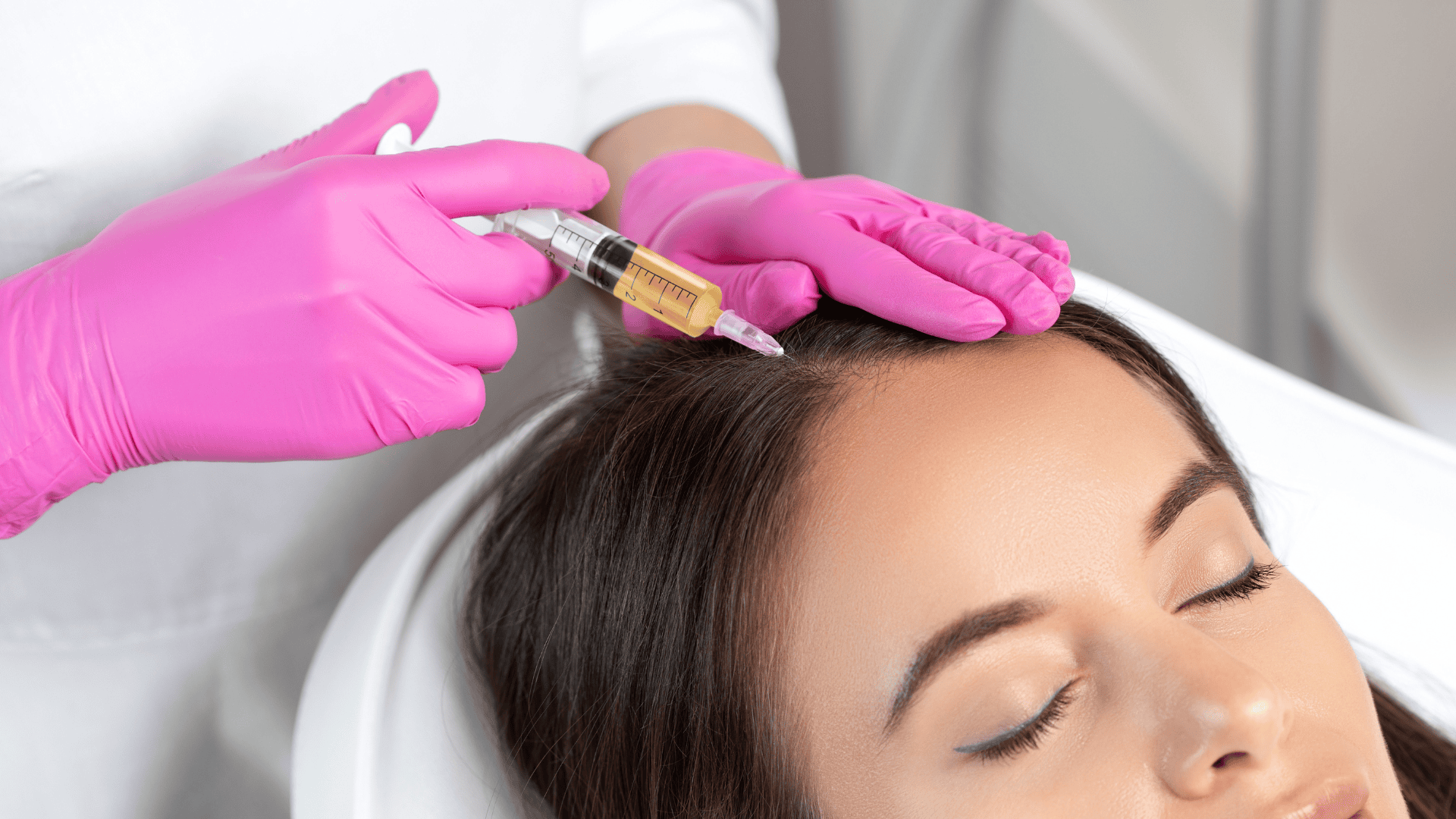
PRP Treatment for Hair (Platelet-Rich Plasma) is an innovative and non-surgical procedure designed to promote hair growth and reduce hair loss. The process begins with drawing a small amount of blood from the patient, typically from the arm. This blood is then placed in a centrifuge, where it is separated into its various components. The result is a concentrated solution rich in platelets and growth factors.
This PRP solution is then injected into the scalp, specifically targeting areas where hair thinning or loss is noticed. The growth factors in the PRP stimulate hair follicles, improve blood circulation, and enhance the overall health of the scalp. This not only helps to revitalize inactive hair follicles but can also improve the thickness of existing hair.
The treatment is minimally invasive, meaning it typically requires little to no downtime. Patients can often resume their daily activities immediately after the procedure. Depending on individual needs and the extent of hair loss, multiple sessions may be necessary to achieve the best results. Additionally, PRP treatment is often combined with other hair restoration procedures for a more comprehensive outcome.
Side effects are rare but can include minor swelling, bruising, or tenderness at the injection sites. Overall, PRP treatment for hair is considered safe and has a good reputation for promoting hair growth in a natural way.
PRP (Platelet-Rich Plasma) treatment for hair loss has become increasingly popular as a natural, minimally invasive solution for those looking to combat thinning hair or early stages of baldness. The treatment is chosen by both men and women who are experiencing hair thinning or shedding due to factors like genetics, hormonal changes, or even stress. One of the main reasons people opt for PRP therapy is because it utilizes the body’s own healing mechanisms. By using a concentration of platelets from the patient's own blood, PRP treatment stimulates the scalp, promotes hair follicle growth, and helps prevent further hair loss. Many individuals choose PRP because it's a non-surgical option that supports natural hair regrowth, offering a less invasive alternative to hair transplants or medications. Additionally, PRP has no risk of allergic reactions since it uses the patient's own blood components.
PRP treatment involves a multi-step process that is fairly simple and can be completed in under an hour. The first step is drawing a small amount of the patient’s blood, usually from the arm, much like a routine blood test. This blood is then placed into a centrifuge, which spins it at high speeds to separate the platelet-rich plasma from the other components of the blood, such as red blood cells. Platelet-rich plasma is highly concentrated with growth factors that are essential for tissue healing and regeneration.
Once the PRP is prepared, the doctor injects it into the areas of the scalp where hair thinning or loss is most prevalent. A series of small injections are carefully administered across the treatment area to evenly distribute the PRP. In some cases, microneedling may also be performed before or during the treatment, as the tiny punctures can help further stimulate the scalp and improve PRP absorption.
The procedure is relatively painless, with most patients reporting only mild discomfort or pressure during the injections. There is minimal downtime associated with PRP therapy, and patients can typically return to normal activities right after the session. For optimal results, multiple treatments are usually recommended over the course of several months, followed by maintenance sessions every few months depending on the individual's response and needs.
One of the most appealing benefits of PRP treatment for hair is that it promotes natural hair growth using the patient’s own biological material. Unlike medications or hair transplants, PRP is a non-surgical option that doesn’t involve the risk of scarring or more invasive recovery periods. This makes it an excellent choice for those seeking a low-risk and more natural approach to hair restoration.
PRP is also highly versatile. It can be used as a standalone treatment for those in the early stages of hair loss or as a complementary therapy alongside other treatments like hair transplants or medications such as finasteride or minoxidil. Its ability to boost the overall health of hair follicles and the scalp means that it can slow down hair thinning and even thicken existing hair, making it look fuller and healthier.
Another significant benefit is the lack of side effects, as PRP is derived from the patient’s own blood. This eliminates the risk of allergic reactions or adverse responses, which can sometimes occur with synthetic treatments. Additionally, since PRP therapy involves only injections, there is minimal downtime, allowing patients to resume their daily activities right after the procedure.
PRP treatment also delivers gradual and natural-looking results. Over a series of treatments, patients often notice improved hair density and less shedding, which can lead to significant increases in confidence and self-esteem. For many people, this non-invasive therapy offers a safe, effective way to address hair loss without the need for surgery or long-term medication use.
PRP treatment for hair is based on well-established principles of regenerative medicine. Platelets play a crucial role in wound healing and tissue regeneration, as they contain growth factors that signal cells to repair and renew themselves. When these platelets are concentrated and reintroduced into the scalp, they create a biologically active environment that supports hair follicle function. This scientific foundation is one of the reasons PRP treatment for hair is widely researched and discussed in medical literature.
From a cellular perspective, the growth factors in platelet-rich plasma help extend the anagen (growth) phase of the hair cycle. This can result in stronger, thicker hair strands and reduced shedding over time. PRP also supports angiogenesis, meaning it helps create new blood vessels that improve nutrient and oxygen delivery to hair follicles. These combined mechanisms explain why PRP is often considered a biologically supportive approach rather than a cosmetic quick fix.
To understand how PRP treatment for hair works, it is important to look at the natural hair growth cycle. Hair grows in phases: anagen (growth), catagen (transition), and telogen (resting). Hair loss often occurs when follicles spend too much time in the resting phase or become dormant altogether. PRP aims to rebalance this cycle by encouraging follicles to re-enter the growth phase.
By injecting platelet-rich plasma into targeted areas of the scalp, growth signals are delivered directly to weakened follicles. Over time, this can lead to improved hair density and better scalp health. PRP treatment for hair does not create new follicles, but it can significantly enhance the performance of existing ones. This makes it particularly relevant for people experiencing thinning rather than complete baldness.
PRP treatment for hair is often discussed as a solution for early to moderate hair loss. Individuals who still have active hair follicles tend to respond better, as PRP works by stimulating what is already present. Both men and women can be suitable candidates, especially those dealing with androgenetic alopecia or diffuse thinning.
However, results can vary depending on age, genetics, lifestyle, and overall health. People with certain medical conditions or advanced hair loss may experience more subtle outcomes. This is why PRP treatment for hair is usually described as a supportive or complementary option rather than a guaranteed cure. Understanding who benefits most helps set realistic expectations and contributes to informed decision-making.
There are several non-surgical approaches to hair loss, including topical solutions, oral medications, and low-level laser therapy. PRP treatment for hair stands out because it uses the body’s own biological material rather than external substances. This natural approach appeals to people who prefer minimal chemical or pharmaceutical involvement.
👉 Uses autologous blood components, reducing compatibility concerns
👉 Focuses on scalp health and follicle stimulation rather than surface-level coverage
👉 Can be combined with other non-surgical treatments for a holistic approach
👉 Targets the underlying biological environment of hair growth
While medications may slow hair loss, PRP aims to actively support regrowth and hair quality. Comparing these options helps readers understand where PRP treatment for hair fits within the broader landscape of hair restoration methods.
Healthy hair starts with a healthy scalp, and PRP treatment for hair strongly reflects this principle. Poor circulation, inflammation, or buildup on the scalp can negatively affect follicle performance. PRP injections help improve blood flow and deliver growth factors directly to the scalp tissue.
Over time, this improved environment can reduce micro-inflammation around follicles and support stronger hair anchoring. PRP treatment for hair is therefore not only about hair strands but also about optimizing the condition of the scalp itself. This broader focus is one reason PRP is often described as a regenerative rather than cosmetic procedure.
Clinical studies on PRP treatment for hair have shown promising results, particularly in terms of hair thickness and density. Many studies report measurable improvements after multiple sessions, especially when treatments are spaced consistently over several months. Researchers often highlight PRP’s ability to increase hair count and follicle diameter.
That said, outcomes are not uniform across all studies. Variables such as platelet concentration, injection technique, and treatment frequency can influence results. This ongoing research landscape shows that PRP treatment for hair is an evolving field, with protocols continuing to be refined for better consistency and effectiveness.
PRP treatment for hair is rarely a one-time procedure. Most protocols suggest an initial series of sessions followed by maintenance treatments. This structured approach aligns with the natural pace of hair growth, which requires time and consistency.
👉 Initial treatments are often spaced several weeks apart
👉 Maintenance sessions may be recommended every few months
👉 Results tend to improve gradually rather than immediately
👉 Long-term consistency can help sustain improvements
Understanding this timeline helps manage expectations and reinforces that PRP treatment for hair is a process rather than an instant solution.
PRP treatment for hair is frequently discussed in combination with other approaches. For example, it may be used alongside topical treatments or after hair transplant procedures to support healing and growth. This combination-based strategy reflects the idea that hair loss often has multiple contributing factors.
By addressing scalp health, follicle stimulation, and external care simultaneously, outcomes may be enhanced. PRP treatment for hair acts as a supportive layer within a broader hair care plan rather than a standalone miracle treatment. This integrative perspective is increasingly common in modern hair restoration discussions.
One of the most cited advantages of PRP treatment for hair is its safety profile. Because the plasma is derived from the patient’s own blood, the risk of allergic reactions is extremely low. This autologous nature makes PRP biologically compatible with the body.
👉 No synthetic substances are introduced into the scalp
👉 Minimal risk of immune reactions
👉 Short recovery time compared to surgical options
👉 Widely used in other medical fields such as orthopedics and dermatology
These factors contribute to the perception of PRP treatment for hair as a low-risk, biologically aligned option for hair support.
It is important to approach PRP treatment for hair with realistic expectations. Results are typically subtle at first and become more noticeable over time. Increased thickness, reduced shedding, and improved hair texture are common observations rather than dramatic overnight changes.
Individual response plays a major role, and not everyone will experience the same level of improvement. PRP treatment for hair should be seen as a gradual enhancement process that works best when expectations are aligned with biological realities. Clear understanding helps avoid disappointment and supports long-term satisfaction.
Lifestyle choices can significantly impact the effectiveness of PRP treatment for hair. Factors such as stress, nutrition, sleep quality, and smoking habits all affect hair health. PRP can support follicles, but it cannot fully counteract negative lifestyle influences.
PRP treatment for hair has gained global attention as interest in non-surgical aesthetic treatments continues to rise. Its use across different countries reflects a broader shift toward regenerative and minimally invasive solutions. People are increasingly drawn to treatments that work with the body rather than against it.
This growing popularity also drives further research and protocol improvements. As awareness increases, PRP treatment for hair continues to evolve from a niche procedure into a widely recognized option within the field of hair restoration.
During your consultation, you will discuss your wishes, medical history, and expectations with the doctor. The doctor will examine you, take measurements if necessary, and explain which treatment suits you best, including risks and recovery. You will have the opportunity to ask questions and then receive a clear treatment proposal.
Make sure you have all relevant medical information ready, such as previous treatments, allergies, or medical conditions. This allows the doctor to give you better advice.
Payment is made securely via SurgeryBooking. You pay the amount in advance to SurgeryBooking. We hold the funds and transfer them to the clinic after your treatment. Cancellation or change conditions vary per clinic and are clearly communicated in advance.
During the consultation (online or at the clinic), the doctor will assess this based on your health, expectations, and physical characteristics. You will discuss what you want, what is possible, and what the limitations are. Sometimes there are alternatives if the chosen treatment is not ideal.
Through SurgeryBooking.com, you can quickly and easily book a consultation or procedure with doctors and clinics worldwide. SurgeryBooking.com provides an overview of doctors and clinics, allowing you to make an informed and transparent choice when booking a consultation or procedure.
You can easily book through the profile of the desired clinic or doctor. Select the desired treatment, enter your details, and choose an available date and time. If there are any costs involved, you will complete the payment first. Afterwards, you will receive a confirmation email with all the details.
Yes, during the booking process, you can indicate whether you prefer an online consultation or an in-person consultation at the clinic.
With SurgeryBooking.com, you gain access to a global network of doctors and clinics. Through SurgeryBooking.com, you can easily book a consultation or a cosmetic procedure directly. Clinic profiles provide information about available cosmetic procedures, reviews, photos of the clinic, and other relevant details. This enables you to compare costs and make an informed decision when booking a consultation or procedure.