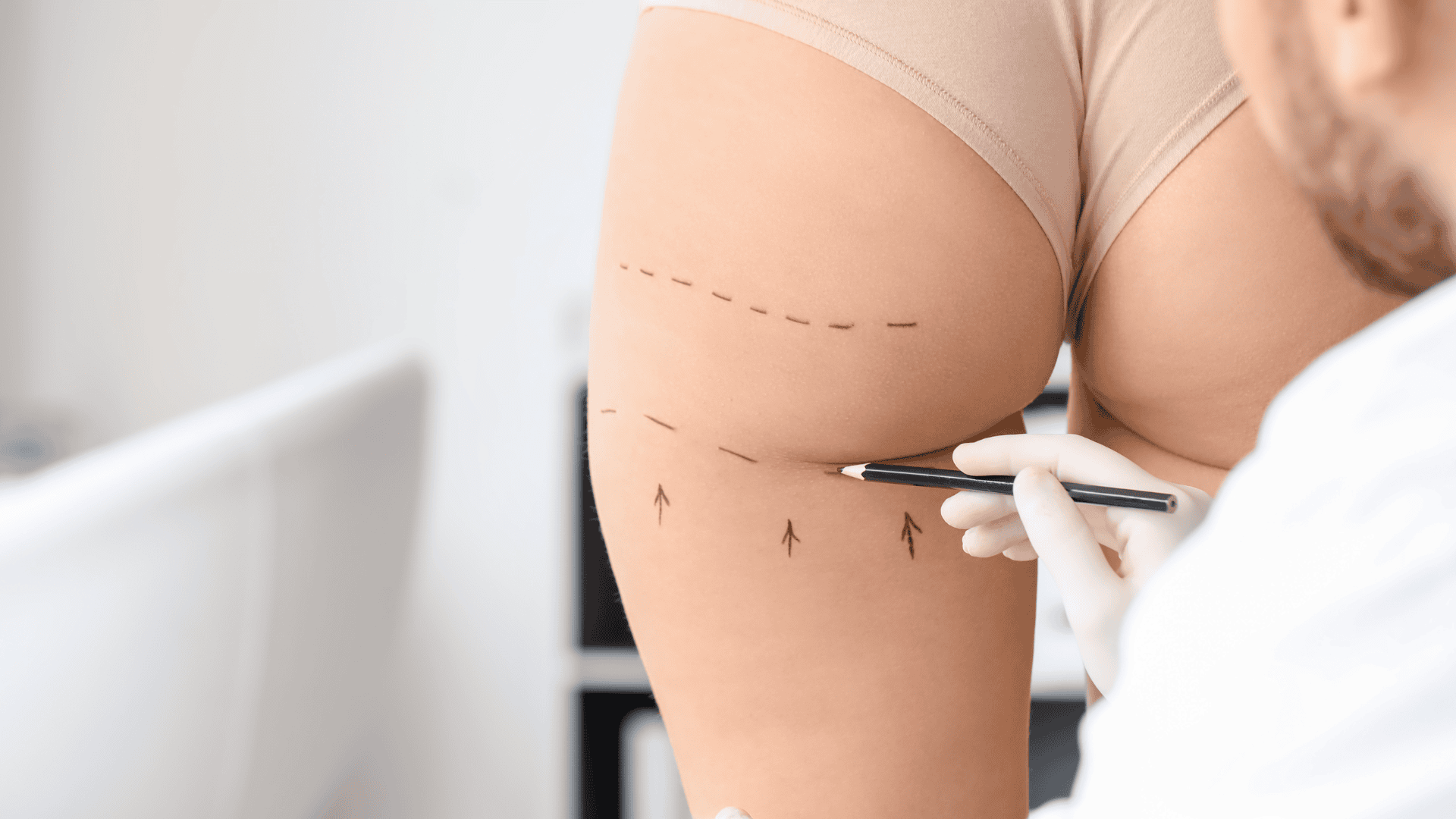
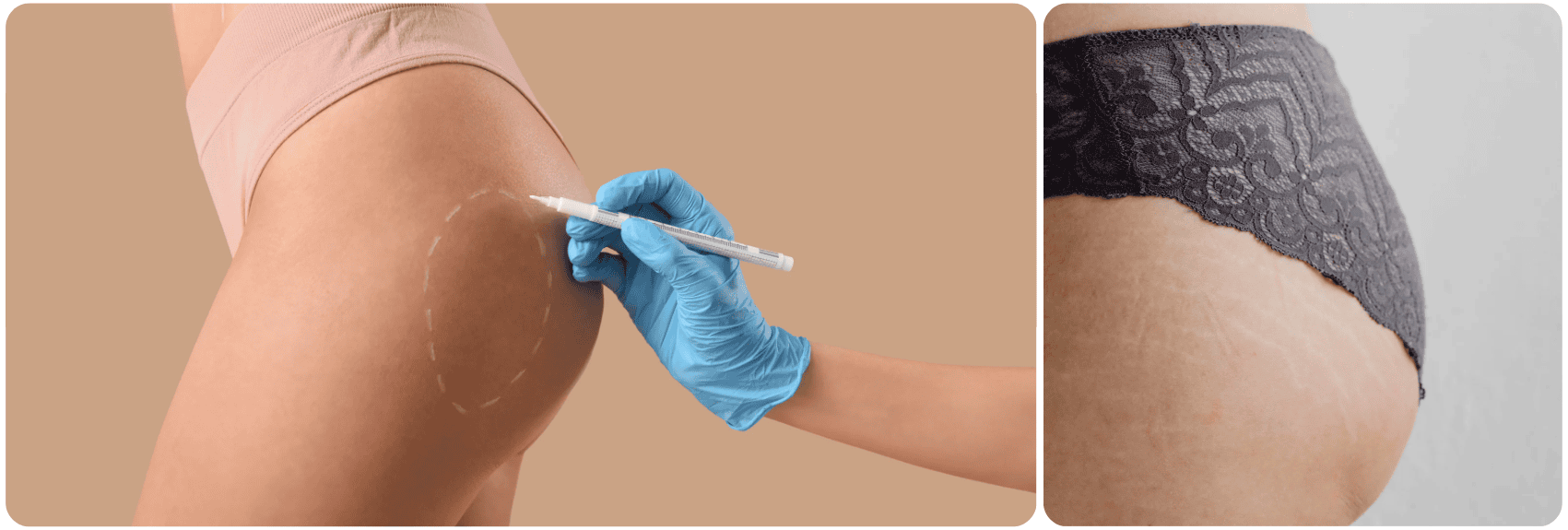
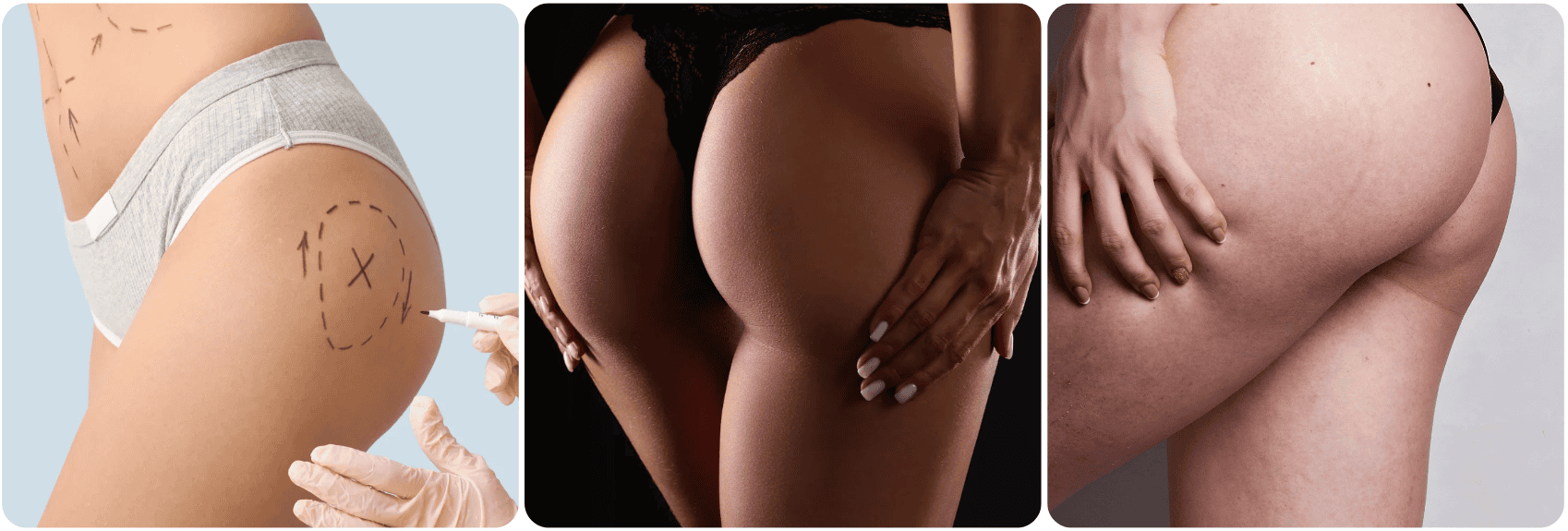
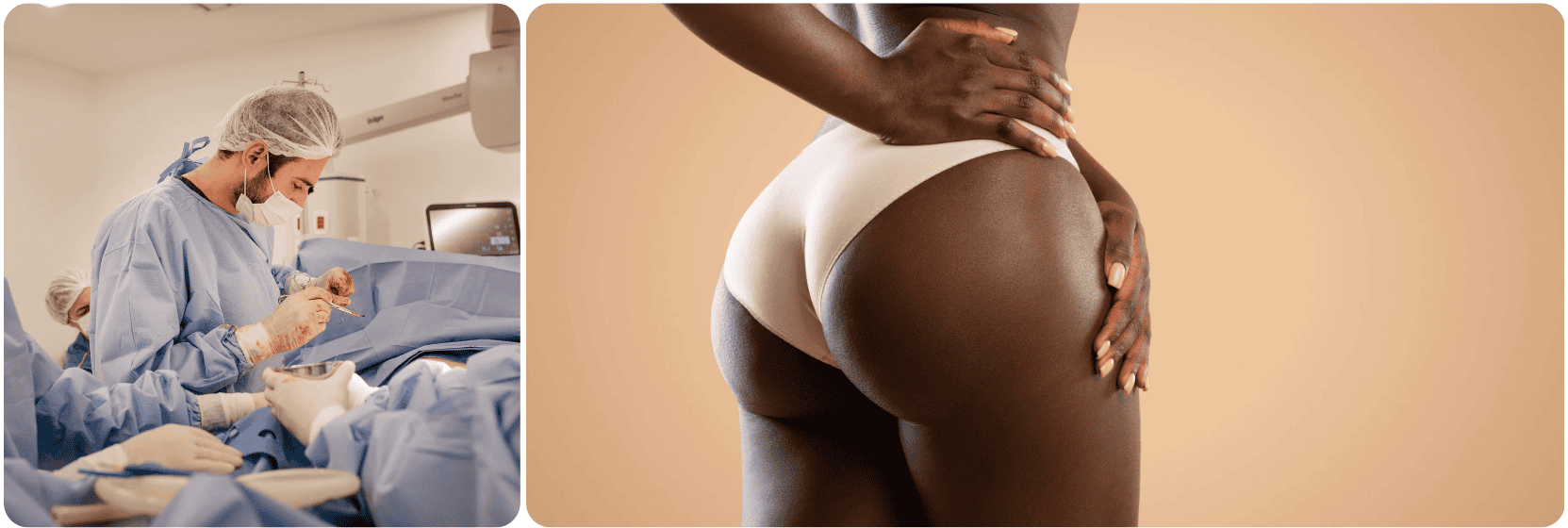
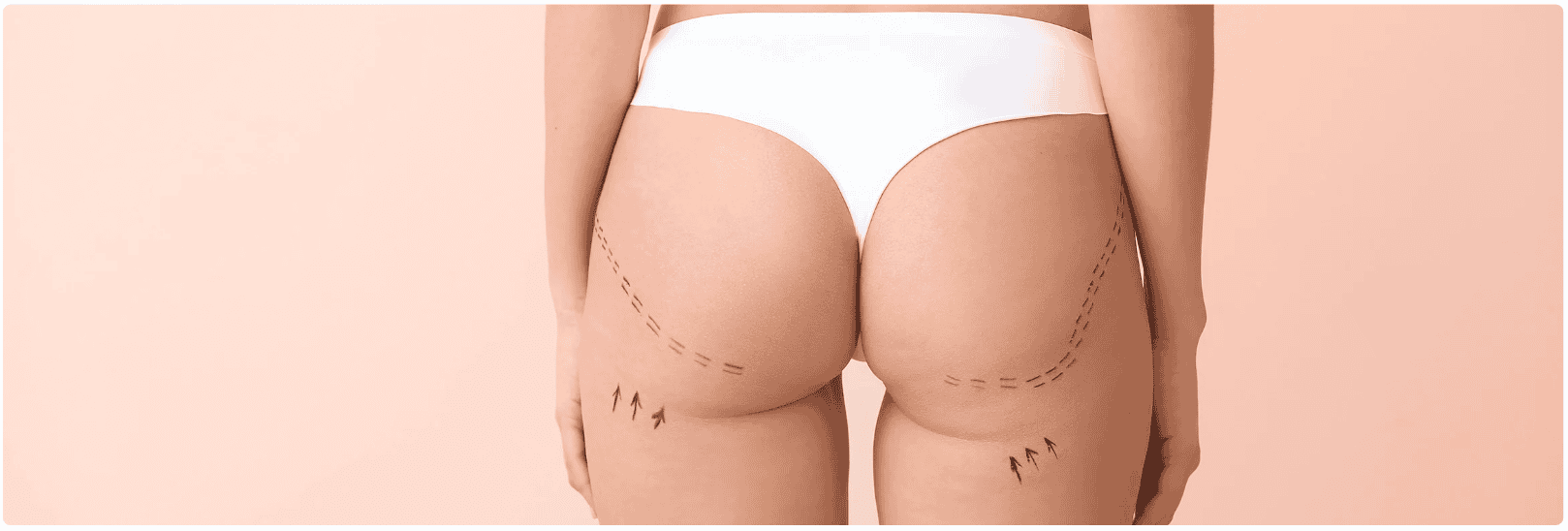
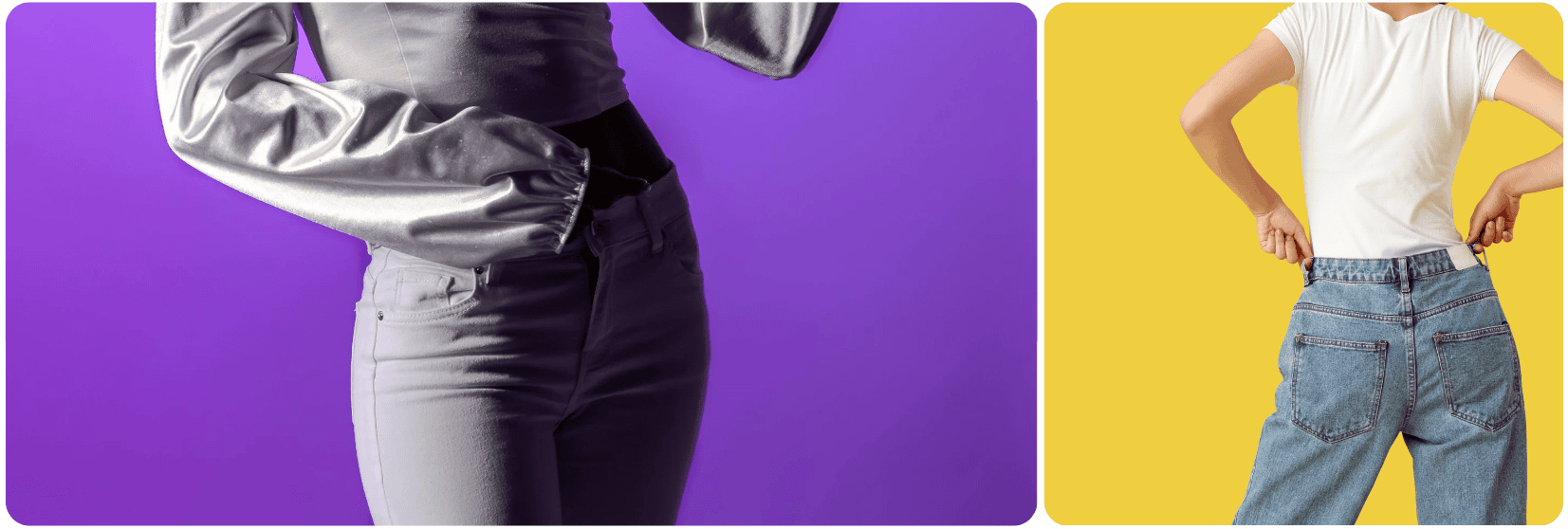
Lipofilling is a cosmetic procedure in which fat from the patient’s own body is used to enhance the volume of certain areas. When it comes to lipofilling of the buttocks, excess fat is removed from other areas, such as the abdomen, hips, or thighs, through liposuction. This fat is then purified and injected into the buttocks to create a fuller, more sculpted appearance.
This procedure offers a natural alternative to buttock implants since it uses the body's own fat, reducing the risk of complications like rejection or allergic reactions. The recovery time is generally shorter compared to implants, and as fat is removed from problem areas, patients also benefit from a more contoured look in other parts of the body.
One of the main advantages of lipofilling is that the results tend to look and feel natural. However, not all the injected fat remains permanently in the treated area; some of it may be reabsorbed by the body over time. For this reason, a second procedure may sometimes be needed to maintain the desired volume.
Although lipofilling is considered a relatively safe procedure, there are some risks involved, such as infection, fat necrosis (where fat cells die), or asymmetry in the buttocks. It is crucial that the procedure is performed by an experienced surgeon, as the technique and aesthetic judgment are key to achieving satisfying results.
Lipofilling can be a good option for individuals seeking a subtle, natural enhancement of their figure without artificial implants, provided they have enough body fat to use for the procedure.
Lipofilling, also known as fat transfer, is an increasingly popular procedure for enhancing the buttocks because it offers a natural, minimally invasive way to improve the shape and volume of the area. Unlike implants, which involve synthetic materials, lipofilling uses your own body fat, making it a more natural option with fewer risks of complications or rejection. Many people opt for lipofilling to achieve a fuller, more sculpted look without the need for foreign implants. It is especially appealing for those who want to enhance the size of their buttocks while also slimming other areas like the abdomen, thighs, or flanks, as the fat is harvested from these regions through liposuction.
This dual benefit—contouring one area while enhancing another—makes lipofilling an attractive choice. People choose this procedure not only for the aesthetic improvements it provides but also for the natural feel and long-lasting results that come from using their own fat.
One of the most discussed aspects of lipofilling of the buttocks is fat survival. After the fat is transferred, the body naturally reabsorbs a percentage of the injected fat cells during the healing phase. This is completely normal and part of how the body adapts to the procedure. Surgeons often slightly overfill the area to compensate for this expected loss, aiming for a balanced final result once healing is complete. The remaining fat that successfully integrates becomes a living part of the tissue and can last for many years.
Several factors influence how much fat survives after lipofilling. These include the quality of the harvested fat, the injection technique, and how well the patient follows recovery guidelines. Lifestyle habits such as smoking can negatively affect blood circulation, which plays a crucial role in fat retention. This is why realistic expectations are essential when considering fat transfer to the buttocks, as results develop gradually rather than instantly.
Not everyone is automatically a suitable candidate for lipofilling buttocks, and understanding this helps prevent unrealistic expectations. Candidates typically have enough excess fat in donor areas such as the abdomen, thighs, or flanks. The quality and availability of fat directly affect how much volume can be added to the buttocks. Individuals with very low body fat may not achieve significant enhancement through this method alone.
Equally important is overall health and skin condition. Good skin elasticity allows the buttocks to adapt better to the added volume, creating smoother and more natural contours. Stable body weight is also recommended, as major weight fluctuations after the procedure can alter results. Lipofilling is often chosen by people seeking subtle shaping rather than dramatic enlargement, making it ideal for those who value proportion and natural aesthetics.
The lipofilling procedure begins with liposuction, where fat is harvested from areas of the body with excess fat, such as the abdomen, thighs, or flanks. First, the surgeon applies a local or general anesthetic, depending on the size of the area being treated and the patient’s comfort level. A small incision is made in the donor area, and a thin tube, or cannula, is used to gently remove the fat through suction. Once the fat is collected, it is purified to remove any impurities and prepared for injection. The purified fat is then strategically injected into the buttocks through small, carefully placed incisions.
The surgeon sculpts the area by injecting the fat at different depths to ensure a smooth, natural-looking enhancement. The entire procedure typically takes a few hours, depending on the amount of fat being transferred. After the procedure, patients can expect some swelling and bruising, but recovery is generally quicker compared to more invasive surgeries. Most patients can return to normal activities within a week, though it may take a few months to see the full results as the fat settles and the body heals.
Lipofilling offers a wide range of benefits, especially for those seeking a natural way to enhance their buttocks. One of the biggest advantages is the use of your own body fat, which significantly reduces the risk of allergic reactions or rejection that can occur with synthetic implants. This results in a more natural feel and appearance, as the fat integrates with your existing tissue.
Additionally, because lipofilling involves liposuction, patients enjoy the added benefit of contouring other areas of their body, making it a two-in-one procedure. The results of lipofilling are long-lasting, as the transferred fat that survives the healing process becomes a permanent part of your body. Another key benefit is that lipofilling is minimally invasive, meaning there are no large incisions or implants involved, which translates to less scarring and a quicker recovery.
The psychological benefits are also significant, as many patients report feeling more confident and satisfied with their body shape. The combination of natural results, minimal downtime, and dual body contouring effects makes lipofilling an attractive option for those looking to enhance their buttocks and achieve a more balanced figure.
When comparing lipofilling to buttock implants, the fundamental difference lies in materials and approach. Lipofilling uses the patient’s own fat, while implants rely on silicone-based devices. This makes fat transfer a more organic option, often resulting in a softer and more natural feel. Implants, on the other hand, can provide more dramatic volume in patients with little body fat.
Another key difference is recovery and long-term maintenance. Lipofilling generally involves smaller incisions and lower risks associated with foreign materials. However, implants may require replacement or removal over time. Choosing between these options depends on body type, aesthetic goals, and tolerance for surgical complexity, making education an essential step in the decision-making process.
The success of lipofilling of the buttocks heavily depends on how the fat is injected. Rather than placing fat in one large area, skilled surgeons distribute it in multiple layers and directions. This technique improves blood supply to the fat cells, increasing their chance of survival. It also helps avoid irregularities and uneven contours.
Precision during injection allows for sculpting rather than simple volume increase. By adjusting depth and placement, the buttocks can appear lifted and more proportionate to the hips and waist. This approach highlights why experience and anatomical understanding are critical in achieving refined and harmonious results with fat transfer buttocks.
There are several misconceptions surrounding buttock lipofilling that can lead to confusion. One common belief is that all transferred fat will survive permanently, which is not realistic. A certain percentage will always be absorbed by the body during healing. Another misunderstanding is that the procedure guarantees dramatic size increases similar to implants, which is not always the case.
There are several misconceptions surrounding buttock lipofilling that can lead to confusion.
Some people also assume recovery is effortless because it uses natural fat. While minimally invasive, the procedure still requires downtime and careful aftercare. Understanding these nuances helps set realistic expectations and promotes better satisfaction with the final outcome of fat grafting to the buttocks.
Long-term outcomes of lipofilling of the buttocks are influenced by natural aging and lifestyle choices. Once the fat has stabilized, it behaves like fat elsewhere in the body. This means weight gain can increase volume, while weight loss may reduce it. Maintaining a stable weight is one of the best ways to preserve results.
Aging also affects skin elasticity, which can subtly change the appearance of the buttocks over the years. However, because the enhancement comes from living tissue, results often age more naturally than synthetic alternatives. This is one reason why fat transfer buttocks is valued for its long-term harmony with the body.
Although lipofilling is widely considered safe when performed correctly, it is still a medical procedure with potential risks. These can include infection, uneven fat absorption, or fat necrosis. Awareness of these risks allows individuals to make informed decisions rather than relying on idealized expectations.
Key safety-related aspects often discussed include:
👉 Proper fat purification techniques to reduce complications
👉 Controlled injection depth to protect surrounding tissues
👉 Careful post-procedure monitoring during early recovery
Understanding these points helps emphasize that safety is closely tied to technique, experience, and aftercare rather than the procedure itself.
Aftercare plays a crucial role in the success of lipofilling of the buttocks. Following recovery guidelines helps protect the fragile fat cells during the early healing phase. Avoiding prolonged sitting and sleeping on the stomach or sides is often recommended. These measures reduce pressure on the treated area and support fat survival.
Other aftercare elements commonly emphasized include:
👉 Wearing compression garments for donor areas
👉 Staying well-hydrated to support tissue healing
👉 Avoiding smoking due to its impact on circulation
Consistent aftercare improves comfort, reduces complications, and supports more predictable results from buttock fat transfer.
An often overlooked benefit of lipofilling is how the donor areas contribute to the final aesthetic. Liposuction reshapes regions such as the waist, abdomen, or thighs, creating contrast that enhances the buttocks. This sculpting effect can significantly improve overall body proportions.
An often overlooked benefit of lipofilling is how the donor areas contribute to the final aesthetic.
By refining surrounding areas, the buttocks may appear more lifted even without excessive volume. This highlights why lipofilling is often described as a body contouring procedure rather than a simple augmentation. The relationship between donor areas and the buttocks is central to achieving balanced and natural-looking results.
Beyond physical changes, lipofilling of the buttocks can influence how individuals perceive their body. Many report feeling more confident in clothing and more comfortable with their silhouette. This psychological aspect is often understated but plays a meaningful role in overall satisfaction.
That said, emotional readiness is just as important as physical suitability. Clear expectations and self-motivated reasons tend to lead to more positive experiences. Viewing lipofilling as an enhancement rather than a transformation helps maintain a healthy perspective on aesthetic procedures.
Techniques for buttock fat transfer continue to evolve as research and experience grow. Refinements in fat processing and injection methods aim to improve fat survival and consistency. Surgeons increasingly focus on subtle shaping rather than extreme volume, reflecting a broader trend toward natural aesthetics.
Current discussions in the field often highlight:
👉 Improved purification methods for healthier fat cells
👉 Safer injection planes based on anatomical research
👉 Emphasis on proportion instead of size alone
These developments show how lipofilling of the buttocks is advancing toward safer, more predictable, and more natural-looking outcomes over time.
Recovery after lipofilling of the buttocks happens in stages, and understanding this timeline can improve both comfort and outcomes. In the first days, swelling and bruising are common in both the donor and treated areas. Sitting directly on the buttocks is usually discouraged during this early phase to protect the newly transferred fat cells. Compression garments are often used to support healing in the liposuction areas.
Recovery after lipofilling of the buttocks happens in stages, and understanding this timeline can improve both comfort and outcomes.
Over the following weeks, swelling gradually decreases and the shape becomes more defined. By around three months, the surviving fat has typically stabilized, offering a clearer view of the final result. Full healing can continue for up to six months as tissues soften and integrate. Patience is essential, as buttock fat grafting delivers progressive rather than immediate results.
During your consultation, you will discuss your wishes, medical history, and expectations with the doctor. The doctor will examine you, take measurements if necessary, and explain which treatment suits you best, including risks and recovery. You will have the opportunity to ask questions and then receive a clear treatment proposal.
Make sure you have all relevant medical information ready, such as previous treatments, allergies, or medical conditions. This allows the doctor to give you better advice.
Payment is made securely via SurgeryBooking. You pay the amount in advance to SurgeryBooking. We hold the funds and transfer them to the clinic after your treatment. Cancellation or change conditions vary per clinic and are clearly communicated in advance.
During the consultation (online or at the clinic), the doctor will assess this based on your health, expectations, and physical characteristics. You will discuss what you want, what is possible, and what the limitations are. Sometimes there are alternatives if the chosen treatment is not ideal.
Through SurgeryBooking.com, you can quickly and easily book a consultation or procedure with doctors and clinics worldwide. SurgeryBooking.com provides an overview of doctors and clinics, allowing you to make an informed and transparent choice when booking a consultation or procedure.
You can easily book through the profile of the desired clinic or doctor. Select the desired treatment, enter your details, and choose an available date and time. If there are any costs involved, you will complete the payment first. Afterwards, you will receive a confirmation email with all the details.
Yes, during the booking process, you can indicate whether you prefer an online consultation or an in-person consultation at the clinic.
With SurgeryBooking.com, you gain access to a global network of doctors and clinics. Through SurgeryBooking.com, you can easily book a consultation or a cosmetic procedure directly. Clinic profiles provide information about available cosmetic procedures, reviews, photos of the clinic, and other relevant details. This enables you to compare costs and make an informed decision when booking a consultation or procedure.