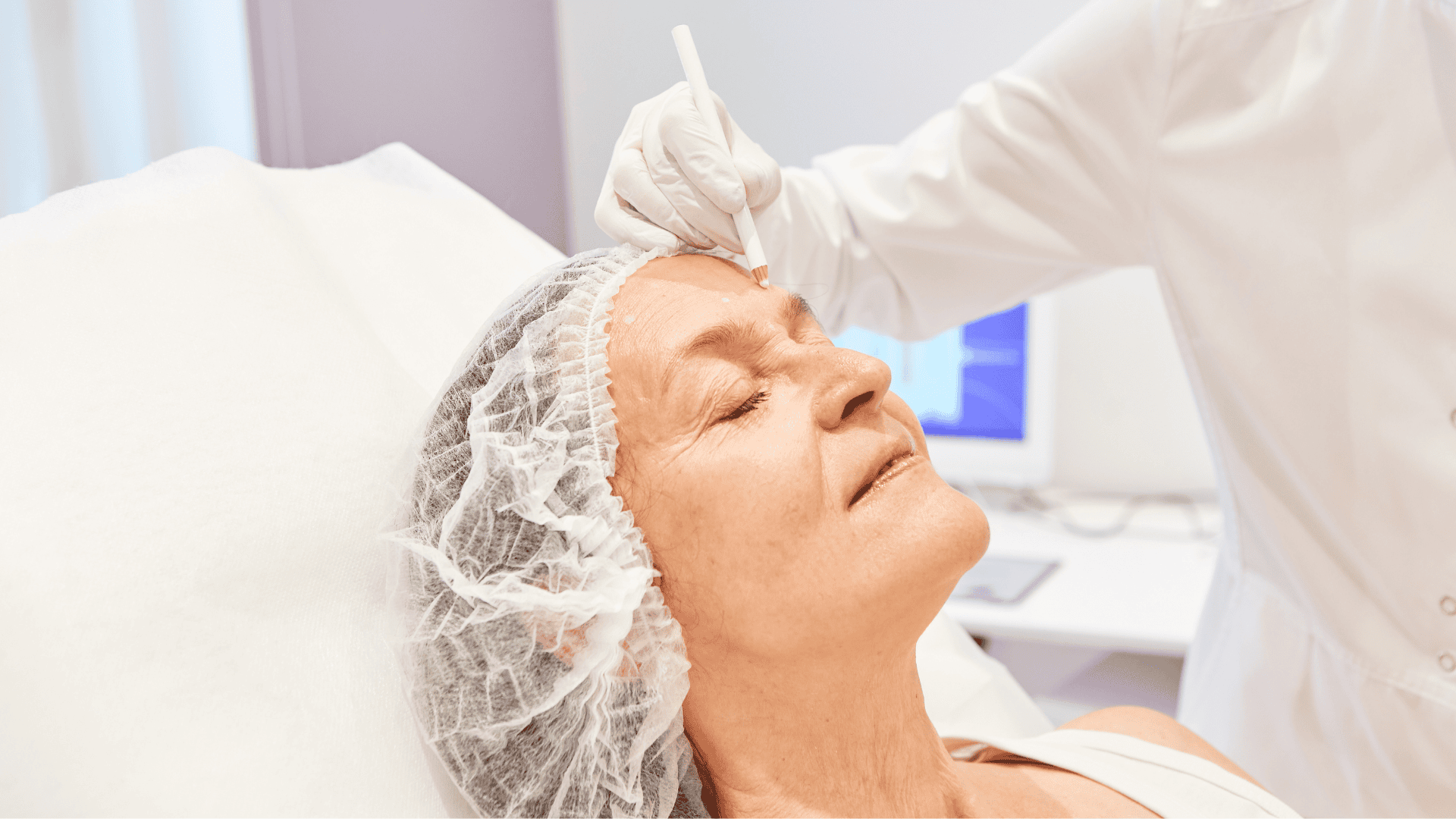
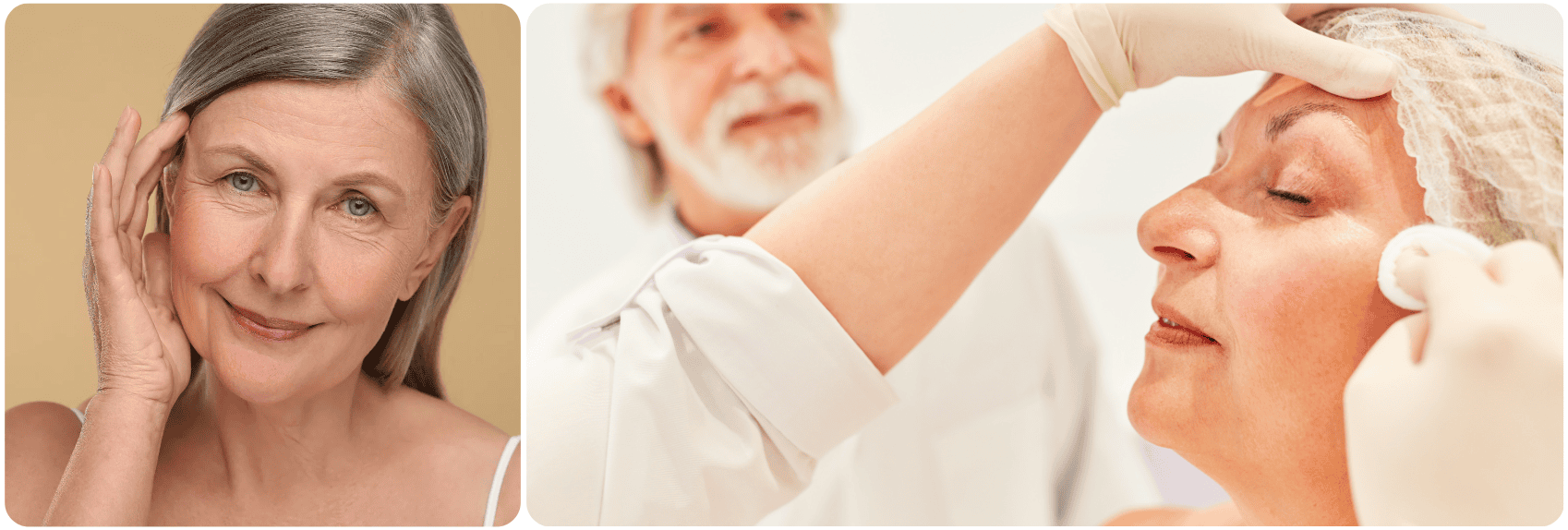
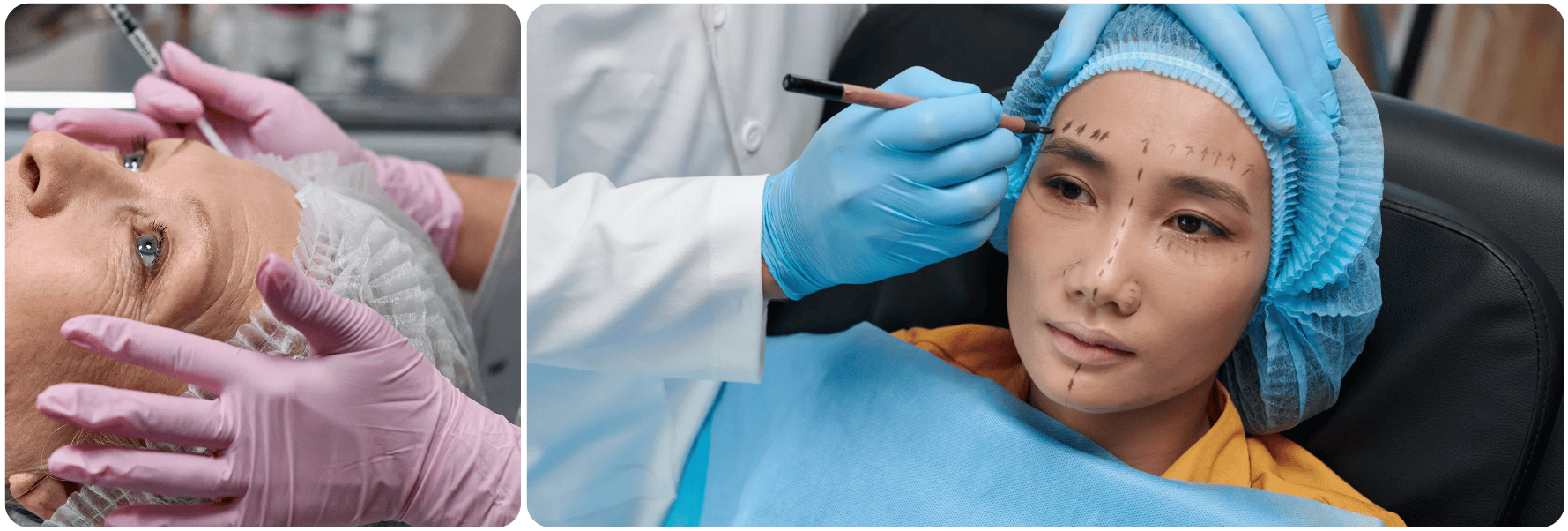
A facelift is a cosmetic surgical procedure designed to reduce the visible signs of aging in the face by tightening and lifting the skin and underlying tissues. As we age, the skin loses elasticity, leading to sagging, wrinkles, and deep lines, particularly around the jawline, neck, and cheeks. A facelift aims to address these changes and restore a more youthful appearance.
During the procedure, the surgeon typically makes incisions around the ears and sometimes along the hairline. The skin is then carefully separated from the deeper structures, and the underlying tissues, such as muscles and fat, are tightened or repositioned to create a smoother, firmer look. Excess skin is removed, and the remaining skin is repositioned to achieve a tighter and more refreshed appearance.
A facelift is a cosmetic surgical procedure designed to reduce the visible signs of aging in the face by tightening and lifting the skin and underlying tissues.
There are different types of facelifts depending on the patient's needs. Mini facelifts, for instance, focus on specific areas like the jawline, while full facelifts address larger portions of the face and neck. The effects of a facelift can last several years, though the natural aging process continues, and factors such as lifestyle and genetics also influence how long the results remain visible.
In addition to the traditional surgical facelift, less invasive alternatives have emerged, such as thread lifts or treatments using ultrasound and radiofrequency. While these options involve less recovery time and carry fewer risks, they often provide less dramatic and shorter-lasting results compared to surgical facelifts.
Recovery from a facelift varies from person to person, but most individuals experience swelling and bruising for a few weeks. The final outcome typically becomes apparent after several months. Like any surgical procedure, facelifts come with risks, including infection, scarring, or uneven results. Therefore, it is essential for patients to be well-informed and have realistic expectations before deciding to undergo a facelift.
A facelift is often considered by individuals who want to address visible signs of aging on their face and neck, particularly sagging skin, deep wrinkles, and loss of facial volume. Over time, as we age, the skin loses elasticity, and the underlying muscles weaken, causing the face to lose its youthful contours. For some, a facelift is a way to regain confidence and improve their appearance, especially when they feel that their outward appearance no longer reflects how they feel on the inside.
It can also help to reverse the effects of environmental factors such as sun damage and gravity, which contribute to skin aging. While non-surgical treatments like Botox or fillers may provide temporary improvements, a facelift offers a more long-lasting solution by directly addressing the underlying tissue and muscles.
A facelift is often considered by individuals who want to address visible signs of aging on their face and neck, particularly sagging skin, deep wrinkles, and loss of facial volume.
In some cases, a facelift may be part of a broader anti-aging regimen that includes other procedures like eyelid surgery or brow lifts. Ultimately, deciding to undergo a facelift is a personal choice driven by the desire to restore a more youthful, refreshed appearance.
A facelift is a surgical procedure that generally involves making incisions along the hairline, around the ears, and sometimes under the chin, depending on the extent of the surgery. The surgeon then lifts the skin, tightens the underlying muscles and connective tissue, and removes any excess skin to create a smoother, more youthful appearance. In many cases, liposuction may also be used to remove fat deposits from the neck area to eliminate sagging or the appearance of a double chin.
A facelift is a surgical procedure that generally involves making incisions along the hairline, around the ears, and sometimes under the chin, depending on the extent of the surgery.
The procedure is typically performed under general anesthesia, though some patients may opt for local anesthesia with sedation, depending on the scope of the surgery. After the skin is repositioned and excess tissue is removed, the incisions are carefully closed with stitches, and bandages are applied to protect the area during the initial healing phase. The procedure usually takes several hours, and patients are monitored closely in the recovery room before being sent home.
Post-operative care is essential for minimizing risks and ensuring optimal healing, with instructions on how to manage swelling, bruising, and pain following surgery. In the weeks following a facelift, patients will be encouraged to avoid strenuous activities and protect their skin from direct sunlight to promote proper healing and reduce the risk of complications.
The primary benefit of a facelift is the dramatic and lasting improvement in facial appearance. The procedure can tighten loose skin, smooth out deep wrinkles, and lift sagging tissues, especially in the lower half of the face, resulting in a refreshed, more youthful look. One of the most noticeable changes is the reduction of jowls and the firming of the neck area, which often shows the earliest signs of aging.
The facelift can restore a more balanced facial profile and redefine the jawline, enhancing facial harmony. Beyond aesthetics, many patients report increased self-esteem and a boost in confidence following their facelift, as they feel more aligned with their youthful self-image.
The results of a facelift can be long-lasting, with many individuals enjoying the benefits for up to ten years or more, although natural aging will continue. Another advantage is the ability to combine the facelift with other procedures, such as eyelid surgery or a brow lift, to address multiple concerns in one surgical session. This holistic approach can provide a more complete rejuvenation. While a facelift does not stop the aging process, it offers a lasting solution that delays the need for additional treatments, giving individuals a significant period of time before further intervention is necessary.
Recovery from a facelift varies from person to person, but most individuals can expect swelling and bruising for a few weeks following the procedure. The initial recovery period typically lasts 1 to 2 weeks, during which time patients are advised to rest and avoid strenuous physical activities. During this time, bandages and drains may be used to minimize swelling and reduce the risk of fluid buildup. Pain and discomfort are usually manageable with prescribed medications, and most patients can return to work or normal activities after about 10 to 14 days.
The initial recovery period typically lasts 1 to 2 weeks, during which time patients are advised to rest and avoid strenuous physical activities.
Full recovery, including the final appearance of the skin and any residual swelling, can take several months. It’s important to follow your surgeon’s aftercare instructions carefully, such as avoiding direct sun exposure and keeping the head elevated while sleeping, to promote optimal healing and ensure the best possible results.
For those who are not ready for a facelift or prefer non-surgical options, there are several alternatives that can provide temporary or less dramatic results. Non-invasive treatments such as Botox, dermal fillers, laser skin resurfacing, and ultrasound therapies like Ultherapy can help address mild to moderate signs of aging by tightening the skin, reducing wrinkles, or adding volume to areas like the cheeks and lips. These treatments typically require little to no downtime and can be a good option for people seeking subtle improvements.
For those who are not ready for a facelift or prefer non-surgical options, there are several alternatives that can provide temporary or less dramatic results.
However, they may need to be repeated periodically, as the results are temporary. While these alternatives are less invasive, they often provide a less significant change compared to a facelift, which directly addresses the skin and underlying tissues for more lasting results.
A facelift focuses on rejuvenating the face, particularly the mid to lower face, addressing issues such as sagging skin, jowls, and deep lines. However, it may not fully address the neck area, which can also show significant signs of aging. A neck lift, on the other hand, specifically targets the neck and jawline, removing excess skin, tightening muscles, and addressing issues like a double chin.
In many cases, patients may choose to undergo both a facelift and a neck lift simultaneously for a more comprehensive rejuvenation. Combining the two procedures allows for a more balanced, youthful look, as it addresses both the face and neck areas, which often show aging signs together.
The cost of a facelift varies depending on several factors, such as the surgeon's experience, the geographic location of the clinic, and the complexity of the procedure. On average, the price for a facelift can range from $7,000 to $15,000 or more. Additional costs, such as anesthesia fees, post-operative care, and any complementary procedures (like eyelid surgery or liposuction), may increase the total expense.
Although a facelift represents a significant financial investment, many individuals feel that the long-lasting results make it worthwhile. It is important to discuss the total cost with your surgeon during the consultation and inquire about payment plans or financing options if necessary.
The cost of a facelift varies depending on several factors, such as the surgeon's experience, the geographic location of the clinic, and the complexity of the procedure.
Different skin types can affect how a facelift procedure is planned and the results achieved. Thicker skin may be more resistant to wrinkles but may require more tissue adjustment, while thinner skin can show results more quickly but may be prone to visible scarring. Surgeons also consider skin elasticity and collagen levels to determine the best technique for lifting and repositioning tissues. Customizing the approach based on skin type ensures that the facelift results look natural and harmonize with the patient’s overall facial structure. Pre-operative evaluation often includes assessing skin quality to minimize risks and optimize outcomes.
While many people associate facelifts with older adults, the procedure can benefit a wide range of age groups. Individuals in their 40s may opt for early interventions to prevent deeper wrinkles and sagging, whereas those in their 60s or 70s often seek more comprehensive rejuvenation. Surgeons tailor the procedure based on the patient’s age, skin elasticity, and overall facial anatomy. By understanding age-related changes, the facelift can be customized to provide balanced, natural-looking results for each individual.
Many patients choose to combine a facelift with other cosmetic procedures for enhanced rejuvenation. Combining treatments allows for a more harmonious and youthful result. Common combinations include:
Eyelid surgery to reduce drooping or puffiness
Brow lift to elevate sagging eyebrows
Neck lift to address excess skin or muscle laxity
Liposuction for contouring cheeks or jowls
Dermal fillers for restoring volume
Laser resurfacing to improve skin texture
Chemical peels to reduce pigmentation
These combinations can be planned in a single surgical session or staged over multiple procedures depending on patient goals.
Facelifts are typically performed under general anesthesia, ensuring patients remain unconscious and pain-free during the procedure. However, some patients may be eligible for local anesthesia with sedation, depending on the extent of surgery and surgeon preference. Local anesthesia may reduce recovery time and lower risks associated with general anesthesia. Surgeons discuss anesthesia options during consultations to select the safest and most effective approach for each patient, ensuring a comfortable surgical experience.
Liposuction is often used in combination with a facelift to contour specific facial areas. Removing excess fat from the neck, jawline, or cheeks can enhance the results of the facelift by creating a smoother and more defined appearance. Surgeons carefully evaluate the amount of fat to remove, balancing facial proportions and maintaining natural results. Combining liposuction with a facelift can be particularly beneficial for patients experiencing sagging skin and localized fat deposits simultaneously.
One concern for patients considering a facelift is scarring. Skilled surgeons place incisions strategically along natural creases and behind the ears to minimize visibility. While scars are permanent, they generally fade over time and can be concealed by hair or makeup. Following post-operative care instructions and avoiding sun exposure are crucial for optimal scar healing. In some cases, additional treatments such as laser therapy or silicone gels can further improve scar appearance.
Lifestyle choices can significantly influence the longevity of facelift results. Maintaining a balanced diet, staying hydrated, avoiding excessive sun exposure, and refraining from smoking all contribute to healthier skin and prolonged effects.
Regular exercise can improve circulation and overall skin tone, further enhancing surgical outcomes. Patients who adopt these healthy habits often notice their facelift results lasting longer than those who do not.
In some cases, patients may seek a facelift revision to correct imperfections or address changes that occur over time. Revision procedures are more complex due to scar tissue and altered anatomy, requiring an experienced surgeon. Patients may undergo a mini revision to touch up specific areas or a full revision for a more comprehensive correction. Proper consultation and realistic expectations are key to achieving satisfactory results with a revision facelift.
Modern advancements in surgical techniques and technology have improved facelift outcomes and reduced recovery times. New methods focus on less invasive approaches, such as shorter incisions, endoscopic techniques, and minimal tissue disruption.
Additionally, innovations in suturing and skin repositioning provide more natural results with lower complication rates. These advancements allow surgeons to tailor the facelift procedure to each patient’s anatomy and aesthetic goals, enhancing both safety and results.
During your consultation, you will discuss your wishes, medical history, and expectations with the doctor. The doctor will examine you, take measurements if necessary, and explain which treatment suits you best, including risks and recovery. You will have the opportunity to ask questions and then receive a clear treatment proposal.
Make sure you have all relevant medical information ready, such as previous treatments, allergies, or medical conditions. This allows the doctor to give you better advice.
Payment is made securely via SurgeryBooking. You pay the amount in advance to SurgeryBooking. We hold the funds and transfer them to the clinic after your treatment. Cancellation or change conditions vary per clinic and are clearly communicated in advance.
During the consultation (online or at the clinic), the doctor will assess this based on your health, expectations, and physical characteristics. You will discuss what you want, what is possible, and what the limitations are. Sometimes there are alternatives if the chosen treatment is not ideal.
Through SurgeryBooking.com, you can quickly and easily book a consultation or procedure with doctors and clinics worldwide. SurgeryBooking.com provides an overview of doctors and clinics, allowing you to make an informed and transparent choice when booking a consultation or procedure.
You can easily book through the profile of the desired clinic or doctor. Select the desired treatment, enter your details, and choose an available date and time. If there are any costs involved, you will complete the payment first. Afterwards, you will receive a confirmation email with all the details.
Yes, during the booking process, you can indicate whether you prefer an online consultation or an in-person consultation at the clinic.
With SurgeryBooking.com, you gain access to a global network of doctors and clinics. Through SurgeryBooking.com, you can easily book a consultation or a cosmetic procedure directly. Clinic profiles provide information about available cosmetic procedures, reviews, photos of the clinic, and other relevant details. This enables you to compare costs and make an informed decision when booking a consultation or procedure.